Another Rv Inspection

This inspection report is a textbook example of why you never buy a recreational vehicle without a professional pre-purchase inspection. On the surface, an RV might look road-ready, but underneath the surface can lie a mix of severe safety hazards, structural liabilities, and costly mechanical mismatches.
This specific report for the 2018 Jayco Melbourne Prestige (inspected by Scott Kelly) flagged 31 separate items. Here is an analysis of why an inspection is vital, using direct examples from this vehicle’s report.
1. Uncovering Critical "Life Safety" Issues
The most alarming reason to get an inspection is to protect your life. Sellers may unconsciously ignore or deliberately hide severe safety failures. In this report, the inspector uncovered multiple hazards explicitly designated as [Life Safety Issues]:
Disconnected Life-Safety Alarms: The report notes that the Combination Liquid Propane / Carbon Monoxide Detector is over 8 years old, but more importantly: "It has been disconnected. Power has been cut to the detector."
Aged Smoke Alarms: The smoke detector is also noted as being 8+ years old and past its reliable lifespan.
Fire Extinguisher Incompatibility: The seller upgraded the RV to lithium batteries, but left a standard ABC dry chemical fire extinguisher inside. The report notes this is "Not Sufficient for Lithium Batteries," which require specialized agents (like AVD) to stop thermal runaway.
2. Catching Catastrophic Water Intrusion (The "RV Killer")
Water damage can easily rot an RV from the inside out, costing thousands of dollars to fix. An inspector knows exactly where to look for breaches in the armor. This report found massive vulnerability to water in two major areas:
Degraded Roof and Trim Sealants: The inspection found "cracking and separation in the sealant" across almost every exterior joint, including the front cap, rear cap, vents, skylight, and perimeter trim.
Exposed Underbelly and Subfloors: On Slideout 1, the inspector found two wide-open access holes where the dinette seatbelts bolt to the frame, noting: "These holes are wide open and exposed to the elements. This can allow for water intrusion as water runs down... and wicks underneath." Furthermore, there were structural punctures (screw holes) in the waterproof Darco wrap material protecting the subfloors on both slideouts.


3. Spotting Hidden "Ticking Financial Time Bombs"
An inspection prevents you from inheriting immediate, massive repair bills right after purchase. This vehicle had several hidden mechanical issues that would cost a buyer thousands of dollars immediately:
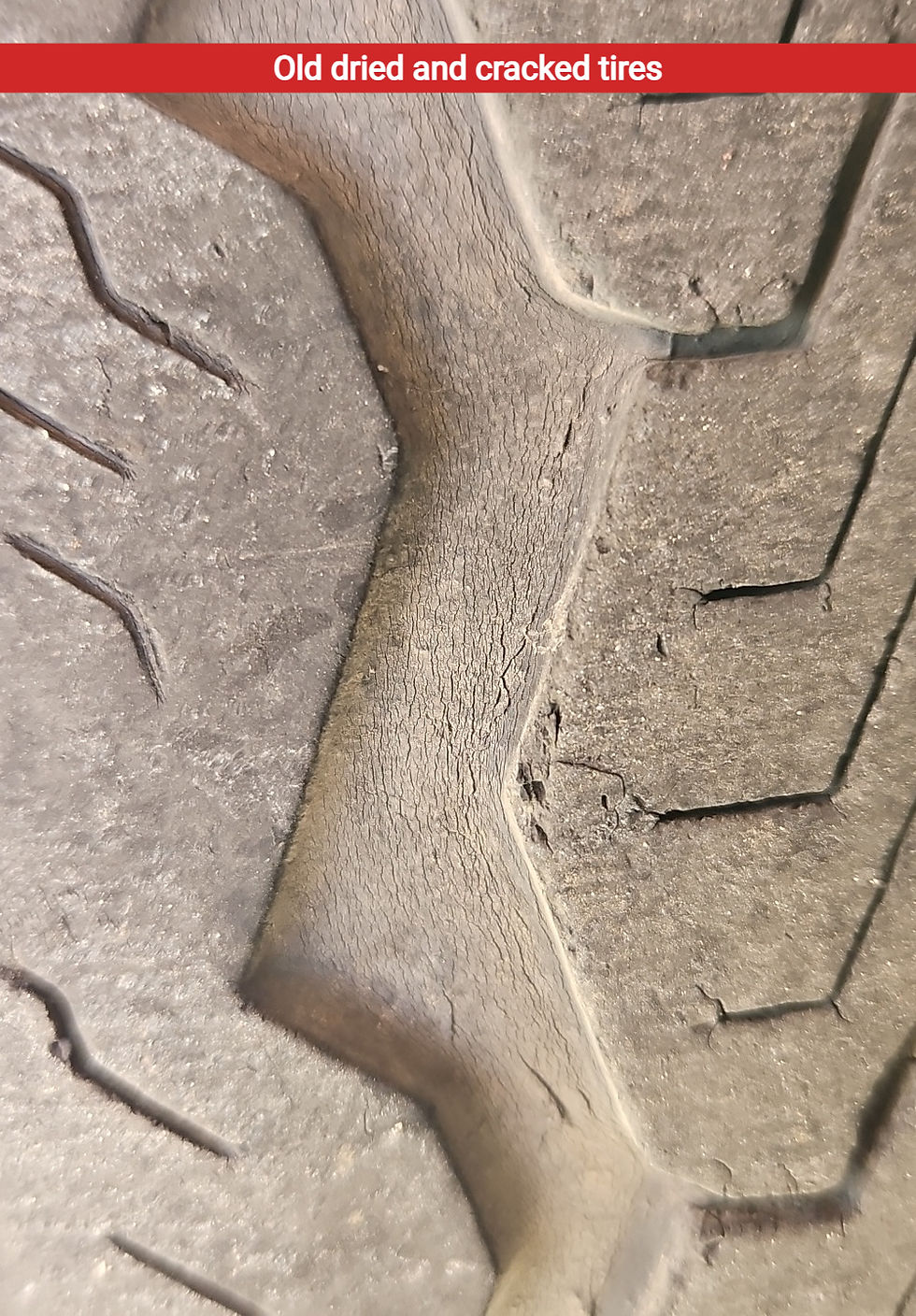
Dangerously Aged Tires: All six wheel assemblies use Continental tires manufactured in 2017 and 2018. Because this inspection took place in 2026, these tires are 8 to 9 years old. The inspector noted "cracking in the tread area" and "drying out." Given the NTSB recommendation to replace tires at 6 years, the buyer would immediately have to shell out a couple thousand dollars for a brand-new set of six tires to safely drive it.
Incorrect Battery Charging Setup: The seller threw in expensive lithium batteries as a selling point, but left the original factory power converter. The inspector noted: "Using the charging profile for standard lead acid batteries to charge lithium batteries will eventually ruin the lithium batteries."

4. Identifying Severe "Deal-Breakers" & Factory Recalls
Sellers may offer "quirky" explanations for broken items, or be completely unaware of dangerous factory recalls. An inspector provides an objective reality check:
The Interior Flooding Risk: In the owner-stated comments, the seller admitted that the black tank flush is disconnected because "it will flood the interior if used." The inspector pinpointed the issue, finding a hidden leak in the supply line running underneath the shower and toilet inside the coach.
Active Safety Recalls: The inspector ran the VIN and found an open NHTSA Safety Recall (19V845000) specifically stating that the liquid propane (LP) tank hangers on this model may have insufficient welding, "allowing the LP tank to dislodge" while driving.
Summary
Without this pre-purchase inspection, the buyer (Robert) would have driven off in an RV with zero carbon monoxide protection, an un-flushable toilet that risks flooding the bathroom, a charging system actively destroying its own batteries, tires on the verge of a highway blowout, and a propane tank that could literally fall off the chassis.
An inspection turns a blind gamble into massive negotiation leverage—allowing the buyer to either demand thousands off the price to cover repairs, or safely walk away from a disaster.
Wheel Estate Rv Inspections
serving Northern Arizona, Flagstaff, Williams, Winslow, Prescott, Quad Cities, Holbrook, Happy Jack, Sedona, Camp Verde, Verde Valley, Cottonwood


Comments